前のチュートリアル: PyTorch 分類モデルの変換と OpenCV Python での起動
| |
| 原著者 | Anastasia Murzova |
| 互換性 | OpenCV >= 4.5 |
目標
このチュートリアルでは、以下の方法を学ぶ:
- PyTorch分類モデルをONNX形式に変換する
- 変換したPyTorchモデルをOpenCVのC/C++ APIで実行する
- モデル推論を提供する
上記の項目をResNet-50アーキテクチャの例を通して見ていく。
はじめに
OpenCV APIによるPyTorchモデルの移行パイプラインに関わる主要な概念を簡単に見ていく。PyTorchモデルをcv::dnn::Netへ変換する最初のステップは、モデルをONNX形式へ移すことである。ONNXはさまざまなフレームワーク間でニューラルネットワークを相互運用できるようにすることを目的としている。PyTorchにはONNX変換用の組み込み関数torch.onnx.exportがある。さらに、得られた.onnxモデルをcv::dnn::readNetFromONNXまたはcv::dnn::readNetに渡す。
要件
以下のコードを試せるようにするには、一連のライブラリをインストールする必要がある。ここではpython3.7+の仮想環境を使う。
virtualenv -p /usr/bin/python3.7 <env_dir_path>
source <env_dir_path>/bin/activate
OpenCV-Pythonをソースからビルドする場合は、OpenCV入門 の該当する手順に従うこと。
ライブラリのインストールを始める前に、requirements.txt をカスタマイズし、一部の依存関係を除外したり(たとえば opencv-python を)含めたりできる。以下の行は、先に有効化した仮想環境への要件のインストールを開始する。
pip install -r requirements.txt
実践
この章では、以下の点を扱う。
- 分類モデルの変換パイプラインを作成する
- 推論を行い、予測結果を処理する
モデル変換パイプライン
本節のコードはsamples/dnn/dnn_model_runnerモジュールにあり、次の行で実行できる:
python -m dnn_model_runner.dnn_conversion.pytorch.classification.py_to_py_resnet50_onnx
以下のコードには、下に列挙する各ステップの説明が含まれている:
- PyTorchモデルをインスタンス化する
- PyTorchモデルを
.onnxへ変換する
original_model = models.resnet50(pretrained=True)
full_model_path = get_pytorch_onnx_model(original_model)
print("PyTorch ResNet-50 model was successfully converted: ", full_model_path)
get_pytorch_onnx_model(original_model)関数はtorch.onnx.export(...)の呼び出しに基づいている:
onnx_model_path = "models"
onnx_model_name = "resnet50.onnx"
os.makedirs(onnx_model_path, exist_ok=True)
full_model_path = os.path.join(onnx_model_path, onnx_model_name)
generated_input = Variable(
torch.randn(1, 3, 224, 224)
)
torch.onnx.export(
original_model,
generated_input,
full_model_path,
verbose=True,
input_names=["input"],
output_names=["output"],
opset_version=11
)
上記のコードを正常に実行すると、以下の出力が得られる。
PyTorch ResNet-50 model was successfully converted: models/resnet50.onnx
dnn/samplesモジュールで提案されているdnn_model_runnerを使うと、次のPyTorch分類モデルについて上記の変換手順を再現できる:
- alexnet
- vgg11
- vgg13
- vgg16
- vgg19
- resnet18
- resnet34
- resnet50
- resnet101
- resnet152
- squeezenet1_0
- squeezenet1_1
- resnext50_32x4d
- resnext101_32x8d
- wide_resnet50_2
- wide_resnet101_2
変換済みモデルを得るには、次の行を実行する:
python -m dnn_model_runner.dnn_conversion.pytorch.classification.py_to_py_cls --model_name <pytorch_cls_model_name> --evaluate False
ResNet-50の場合は次の行を実行する:
python -m dnn_model_runner.dnn_conversion.pytorch.classification.py_to_py_cls --model_name resnet50 --evaluate False
変換済みモデルを保存するデフォルトのルートディレクトリは、CommonConfigモジュールで定義されている:
@dataclass
class CommonConfig:
output_data_root_dir: str = "dnn_model_runner/dnn_conversion"
したがって、変換されたResNet-50はdnn_model_runner/dnn_conversion/modelsに保存される。
推論パイプライン
これで、OpenCVのC/C++ APIを使った推論パイプラインにmodels/resnet50.onnxを利用できる。実装済みのパイプラインはsamples/dnn/classification.cppにある。サンプルをビルドすると(BUILD_EXAMPLESフラグの値をONにする)、対応するexample_dnn_classification実行ファイルが生成される。
モデル推論を行うために、ImageNetのクラスID 335に対応する、以下のリスの写真(CC0ライセンス)を使用する:
fox squirrel, eastern fox squirrel, Sciurus niger
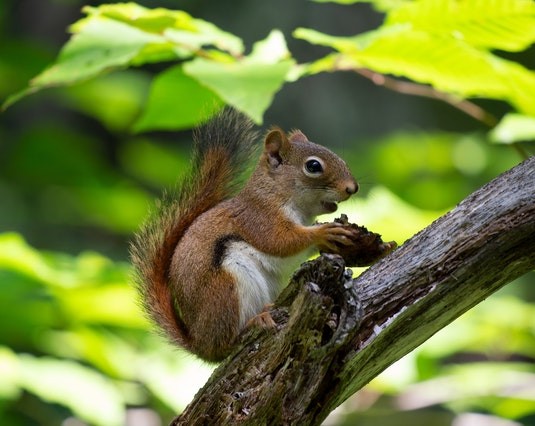
Classification model input image
得られた予測のラベルをデコードするために、ImageNetクラスの完全な一覧を含む imagenet_classes.txt ファイルも必要となる。
このチュートリアルでは、変換したPyTorch ResNet-50モデルの推論処理を、ビルド用ディレクトリ(samples/build)から実行する:
./dnn/example_dnn_classification --model=../dnn/models/resnet50.onnx --input=../data/squirrel_cls.jpg --width=224 --height=224 --rgb=true --scale="0.003921569" --mean="123.675 116.28 103.53" --std="0.229 0.224 0.225" --crop=true --initial_width=256 --initial_height=256 --classes=../data/dnn/classification_classes_ILSVRC2012.txt
classification.cppの要点を段階的に見ていく:
- cv::dnn::readNetでモデルを読み込み、ネットワークを初期化する:
Net net = readNet(model, config, framework);
model引数の値は--modelキーから取得される。ここではresnet50.onnxである。
if (rszWidth != 0 && rszHeight != 0)
{
resize(frame, frame, Size(rszWidth, rszHeight));
}
blobFromImage(frame, blob, scale, Size(inpWidth, inpHeight), mean, swapRB, crop);
if (
std.val[0] != 0.0 &&
std.val[1] != 0.0 &&
std.val[2] != 0.0)
{
}
このステップでは、cv::dnn::blobFromImage関数を使ってモデル入力を準備する。PyTorch ResNetの推論パイプラインに記載されているとおり、初期の画像リサイズとして--initial_width=256 --initial_height=256とともにSize(rszWidth, rszHeight)を設定する。
なお、cv::dnn::blobFromImageでは、まず平均値が減算され、その後にピクセル値がスケールで乗算される点に注意が必要である。そこで、PyTorch分類モデルの本来の画像前処理の順序を再現するため、[0.485, 0.456, 0.406]に255.0を乗じた値に等しい--mean="123.675 116.28 103.53"を使用する:
img /= 255.0
img -= [0.485, 0.456, 0.406]
img /= [0.229, 0.224, 0.225]
net.setInput(blob);
Mat prob = net.forward();
Point classIdPoint;
double confidence;
minMaxLoc(prob.reshape(1, 1), 0, &confidence, 0, &classIdPoint);
int classId = classIdPoint.x;
ここでは最も尤度の高いオブジェクトクラスを選ぶ。本ケースのclassIdの結果は335 - fox squirrel, eastern fox squirrel, Sciurus niger である:
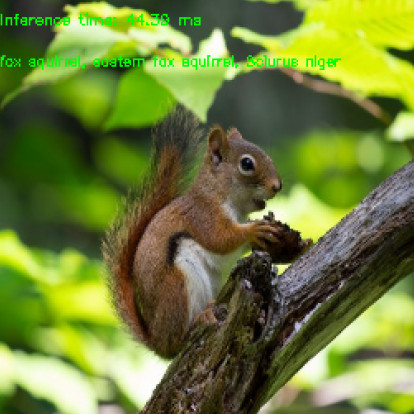
ResNet50 OpenCV C++ inference output

 1.12.0